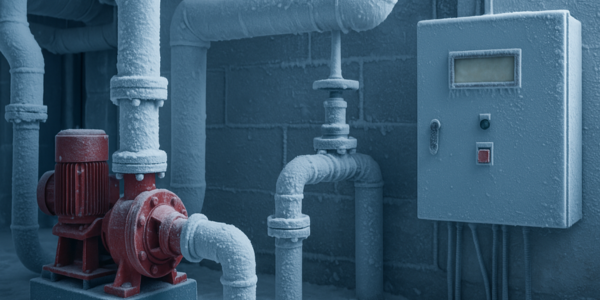
Mechanical rooms are some of the most vulnerable spaces in a commercial building during winter. While most facilities focus on keeping occupants warm and operations running smoothly, the mechanical spaces that house boilers, fire pumps, risers, control valves, and electrical systems often sit in areas exposed to cold air, drafts, or fluctuating temperatures.
When these rooms dip below safe thresholds, the risk of freeze-ups, equipment failure, and fire protection impairment increases sharply.
Ward breaks down why mechanical rooms are so sensitive to freezing temperatures and what facility teams can do to keep critical systems protected throughout the winter season.
Why Mechanical Rooms Are High-Risk in Winter
Mechanical rooms are typically located in areas that are convenient for piping and infrastructure, not areas designed for temperature stability. Common problem placements include:
- Exterior walls
- Basements with poor insulation
- Rooftop enclosures
- Unconditioned utility corridors
- Stairwells or mezzanines
Cold air infiltration, aging insulation, and poorly sealed access points all contribute to rapid heat loss. When temperatures drop, these spaces can fall below freezing even while the rest of the building remains warm.
A single freeze event in a mechanical room can lead to:
- Burst sprinkler pipes
- Fire pump impairment
- Valve damage
- Electrical failures
- HVAC shutdowns
- Costly downtime and emergency repairs
1. Maintain Consistent Temperature Levels
The most effective protection is stable heat. Even short temperature dips can introduce condensation or ice formation inside equipment.
Key steps include:
- Ensuring dedicated heaters are functional and tested
- Verifying thermostats are accurate and properly placed
- Keeping temperatures above the minimum recommended threshold for fire pumps and riser equipment
- Logging mechanical room temperatures daily during cold periods
Temporary heaters should only be used as a backup and must be placed with proper clearance.
2. Seal Drafts and Air Infiltration Points
Subzero temperatures often enter through small gaps that go unnoticed until a freeze occurs. Check for:
- Gaps around doors and hatches
- Missing or damaged weather stripping
- Unsealed pipe penetrations
- Open louvers or vents that were never winterized
A few inches of exposed surface area can drop room temperature significantly during a cold snap.
3. Insulate Exposed Piping, Valves, and Equipment
Even with proper heating, localized cold spots form around exterior walls and uninsulated surfaces. Insulate:
- Sprinkler piping in mechanical rooms
- Control valves
- Backflow preventers
- Fire pump suction and discharge lines
- Domestic water lines near suppression equipment
Insulation should be checked for wear, moisture intrusion, and gaps.
4. Protect Fire Pumps and Riser Rooms
Fire protection equipment requires strict temperature control to remain operational.
Facilities should:
- Verify fire pump rooms remain above required temperature levels
- Monitor for condensation, which can lead to corrosion or electrical faults
- Ensure riser rooms are fully enclosed and sealed
- Confirm exhaust openings do not introduce winter air directly onto equipment
A pump impairment in winter can place the entire building at risk.
5. Review Mechanical Room Sensors and Alarms
Many facility teams first discover problems in early January, not because something suddenly went wrong, but because conditions quietly deteriorated over the holiday period.
Frozen pipes are uncovered when systems are brought back to full operation. Impairments are discovered during post-holiday walkthroughs. FDNY notices or inspection gaps become apparent when administrative teams return.
At that point, response options are often more limited, repair timelines are tighter, and costs are higher.
Steps Facility Teams Can Take Before the Holidays End
Real-time monitoring reduces emergency calls and unnoticed freeze events.
Consider adding:
- Low-temperature alarms to alert teams before equipment is compromised
- Remote monitoring for multi-building portfolios
- Environmental sensors tied to building management systems
Early warnings allow for quick corrective action before significant damage occurs.
6. Keep Mechanical Rooms Clear and Accessible
Clutter in a mechanical room can block heat flow and make emergency checks difficult. Maintain:
- Clear access paths
- Proper spacing around heaters and equipment
- Immediate visibility to critical valves and controls
Winter emergencies often happen after hours, and a clear space speeds response time.
7. Conduct a Winter Readiness Walkthrough
Before deep winter sets in, schedule an inspection with us to review:
- Heat sources
- Insulation
- Seals and penetrations
- Equipment placement
- Temperature consistency
- Moisture presence
- Condition of fire protection components
Keep Critical Fire Protection Systems Protected All Winter Long
Mechanical rooms are the heart of a building’s fire protection and HVAC infrastructure. When temperatures fall, even minor exposure can create major operational risks. With consistent heating, proper insulation, and proactive monitoring, facilities can safeguard their systems through winter conditions.
If you’d like guidance on preparing your mechanical spaces for winter, contact our team.