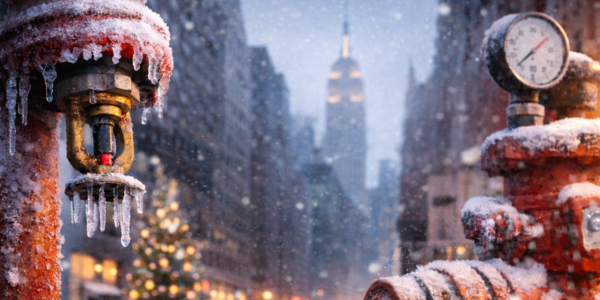
The period between Christmas and New Years is one of the most deceptively risky times of year for commercial fire protection systems across New York.
On the surface, buildings may seem calmer. Offices are quieter. Schools and universities are on break. Hospitality and healthcare facilities may be running altered schedules. But behind the scenes, this combination of cold weather, reduced staffing, and limited oversight creates the perfect conditions for fire protection issues to surface.
For property managers, facility directors, and building operations teams across Long Island, New York City, and surrounding areas, understanding why this spike occurs is the first step toward preventing costly emergencies in January.
Cold Weather Stress Reaches Its Peak
By late December, fire protection systems have already been operating in cold conditions for several weeks. Pipes, valves, and components are under sustained thermal stress, especially in older buildings common throughout Nassau County, Suffolk County, and the five boroughs.
Mechanical rooms on exterior walls, basements, stairwells, and riser rooms that seemed fine in early winter may now be experiencing gradual temperature drops. Even a few degrees can make a difference. Water sitting in low points of sprinkler piping, such as drum drips, becomes increasingly vulnerable to freezing as overnight temperatures fluctuate.
These problems rarely appear suddenly. They build quietly, often unnoticed, until a pipe freezes, a valve fails, or a system impairment is discovered after the holidays.
Reduced Staffing Means Fewer Early Warnings
Between Christmas and New Years, many buildings operate with skeleton crews. Facility managers may be rotating coverage. Maintenance staff may be on vacation. In some properties, especially office buildings and schools, entire floors or wings may be unoccupied for days at a time.
This matters because early warning signs often require human observation:
- A room that feels colder than usual
- Condensation forming on piping
- A heater cycling off unexpectedly
- A slow drip that hasn’t triggered an alarm
When fewer people are on site, those signals are more likely to go unnoticed. By the time staff return to normal schedules in January, a minor issue may have escalated into freeze damage, corrosion, or a system impairment that requires emergency repair.
Holiday Heating Schedules Can Create Risk
Another common factor during this period is adjusted heating schedules. To reduce energy costs, many buildings lower temperatures in unoccupied areas during holiday downtime.
While this may make sense from an energy perspective, it can unintentionally place fire protection systems at risk if heating reductions are not carefully coordinated with system requirements.
Sprinkler piping, valves, and fire pumps are designed to operate within specific temperature ranges. When mechanical spaces drop below those thresholds, even briefly overnight or during a cold snap, the risk of freezing increases significantly.
Across New York, Ward Fire Protection often sees freeze-related issues tied directly to holiday temperature setbacks that were never intended to impact fire protection components.
Fire Inspections May Be Outdated or Incomplete
Late December also exposes another common issue: inspections completed earlier in the year may no longer reflect current conditions.
An inspection conducted in the spring or summer cannot account for winter-specific risks such as:
- Cold air infiltration
- Heating system performance
- Moisture accumulation inside piping
- Areas that become inaccessible due to seasonal storage or layout changes
For commercial properties in New York, where fire protection inspections and testing are closely regulated, relying on outdated inspection data can create a false sense of security during one of the most demanding times of year.
Quiet Buildings Can Be More Vulnerable
Buildings that are partially closed or operating at reduced capacity are often assumed to be lower risk. In reality, the opposite can be true.
Quiet buildings mean:
- Fewer eyes on critical spaces
- Delayed response to alarms or alerts
- Temperature changes that go unnoticed longer
- Mechanical issues that escalate without interruption
Schools, corporate offices, and mixed-use properties across Farmingdale, Long Island, and New York City frequently experience fire protection issues during holiday closures for this very reason.
Why Fire Suppression Issues Often Surface in January
Many facility teams first discover problems in early January, not because something suddenly went wrong, but because conditions quietly deteriorated over the holiday period.
Frozen pipes are uncovered when systems are brought back to full operation. Impairments are discovered during post-holiday walkthroughs. FDNY notices or inspection gaps become apparent when administrative teams return.
At that point, response options are often more limited, repair timelines are tighter, and costs are higher.
Steps Facility Teams Can Take Before the Holidays End
While the holiday period carries inherent risk, there are practical steps property managers and facility directors can take to reduce exposure:
- Confirm consistent heat in all mechanical rooms, riser spaces, and fire pump rooms
- Avoid aggressive temperature setbacks in areas housing fire protection components
- Drain drum drips and low points before extended cold periods
- Ensure clear access to valves, heaters, and inspection points
- Consider winter-focused inspections to reassess system readiness
These steps don’t require overhauling operations, but they do require attention during a time when it’s easy for details to slip.
Why Professional Fire Inspections Matter This Time of Year
Between Christmas and New Years, many facility teams are balancing staffing challenges, holiday schedules, and year-end responsibilities. This is often when outsourcing inspections provides the most value.
A professional fire protection inspection conducted with winter conditions in mind can:
- Identify freeze risks before damage occurs
- Verify heating adequacy in critical spaces
- Ensure compliance remains intact through year-end
- Reduce the likelihood of emergency calls in January
Ward Fire Protection, based in Farmingdale and serving commercial properties throughout Long Island, New York City, and surrounding areas, regularly supports property and facility teams during this critical period.
Staying Ahead of the New Year
Fire protection issues don’t take holidays. The combination of cold weather, reduced staffing, and altered building operations makes the days between Christmas and New Years one of the most important times to stay vigilant.
For facility teams across New York, addressing potential risks now can make the difference between a smooth start to January and an avoidable emergency.
If you have questions about winter readiness, inspection timing, or cold-weather protection, the Ward team is available to help you evaluate next steps and keep your building protected through the season.